

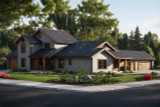
As residential designers, we've watched multigenerational living shift from an occasional request to one of the most influential drivers shaping modern home design. What was once considered a specialized layout -accommodating aging parents, returning adult children, or extended family members has become a mainstream priority for new-home clients in 2025. Economic realities, evolving care responsibilities, cultural expectations, and a strong desire for adaptable living arrangements have pushed multi-gen design into the architectural spotlight.
This year’s most successful multigenerational layouts emphasize refined privacy strategies, seamless accessibility, thoughtful use of square footage, and better integration of work-from-home, caregiving, and lifestyle needs. As residential designers who create, review, and refine a wide range of architectural plans, we have a unique vantage point on which solutions are rising, which are stabilizing, and which design principles will remain essential well into the future.
Below, we break down the leading multigenerational home design trends of 2025, explore the forces driving their popularity, and highlight the timeless features every homeowner should look for when evaluating a multi-gen layout—whether building today or preparing for future lifestyle transitions.
The Growing Demand for Dual Primary Suites
One of the strongest movements shaping 2025 home design is the widespread adoption of two fully equipped primary suites: bedrooms that each include their own bathroom, generous closet space, and private or semi-private access. While dual suites have existed for years, they have now moved from a “special circumstance” feature to a near-essential component for families anticipating multigenerational living.
What’s behind the rise of dual primary suites?
- Planning for aging-in-place
Clients in their 40s, 50s, and 60s increasingly design with future caregiving needs—or their own long-term mobility needs—in mind. A second primary suite ensures comfort and dignity for aging parents or future-proof flexibility for the homeowners themselves. - Adult children returning home
Rising living costs and shifting economic conditions mean more young adults are living at home longer. Families want to offer a full suite—not a secondary bedroom that feels temporary or inferior. - Equal comfort for all generations
A true multigenerational layout respects privacy and autonomy. Creating two equally comfortable suites eliminates hierarchy and supports long-term harmony in the home.
Why this trend has lasting power
Dual primary suites solve real, enduring lifestyle challenges - not short-lived design preferences. Even clients who don’t currently need a second suite value the flexibility for guests, extended stays, future rentals, or transitional life phases.
For these reasons, we expect dual primary suites to remain a foundation of multigenerational home design for many years to come.
Purpose-Built Multigenerational Wings: The Rise of Independent Living “Pods”
A rapidly expanding trend in 2025 is the inclusion of dedicated multigenerational wings—often referred to as pods, suites, or in-law quarters. As residential designers, we’re seeing these spaces evolve far beyond a simple secondary bedroom cluster. In many new homes, these pods function as semi-independent living environments, offering comfort, privacy, and autonomy while still being integrated into the main home’s structure.
What today’s multigenerational “pod” typically includes:
- A separate entrance or welcoming private foyer
- A bedroom or full suite with attached bath
- A dedicated living or sitting area for personal retreat
- An optional kitchenette or well-equipped wet bar
- Sound-buffering walls, pocket doors, or layered privacy elements
- Direct access to outdoor living areas or patios
Why multigenerational pods are thriving right now
Families increasingly need a balance of closeness and independence. A dedicated suite ensures privacy for aging parents, adult children, or long-term guests—without the cost or zoning challenges of constructing a detached ADU. In many regions, local regulations make building a separate unit difficult, making attached pods a practical and cost-effective alternative.
A long-term design solution, not a passing trend
Absolutely. These wings offer remarkable versatility. What begins as a parent suite can later become a caregiver’s quarters, a private rental, a teen retreat, or an independent guest apartment. As zoning laws evolve and multigenerational living continues to rise, we expect pod-based planning to expand even further.
Expanded Main-Level Living: Aging-in-Place Design That Works for Every Generation
Main-level living has long been a desirable feature in residential design, but in 2025 it has become an essential component of successful multigenerational homes. Families today are intentionally choosing layouts that minimize or eliminate reliance on stairs, ensuring that at least one generation can live comfortably on the ground floor.
Key main-level features trending in 2025:
- Primary and secondary suites on the first floor for ease of access
- Little to no interior steps, ensuring smooth circulation
- Wider hallways and clearances for mobility aids and comfortable passing
- Zero-step entry from the garage or main entry to avoid trip hazards
- Shower-only bath options designed with accessibility in mind
- Flex rooms that can convert to bedrooms with minimal or no modification
Why this is surging now
Homeowners are looking beyond today’s needs and planning for the realities of tomorrow. Rather than retrofitting later—or compromising comfort—families want homes designed to evolve gracefully with them. Designers have responded by embedding these features subtly, without the clinical feel that older accessibility modifications once carried.
Is this trend here to stay?
Without question. Aging-in-place design has been a permanent shift in residential architecture for over a decade, and the refinements emerging in 2025 only reinforce its longevity. Ground-level living is now considered a core design principle—not an optional upgrade.
Flexible Living Zones: Spaces That Evolve With Your Family
One of the defining strengths of multigenerational homes is their inherent adaptability. In 2025, designers are placing even greater emphasis on flexible zones - spaces intentionally crafted to shift purpose as household needs change over time.
As residential designers, we see more families prioritizing layouts that can transition seamlessly across life stages, from early childhood to aging parents to changing work routines.
Examples of trending flexible spaces in 2025:
- A study that becomes a bedroom with the simple addition of French doors
- A loft or bonus room originally intended for teens that later serves as a second living room
- Jack-and-Jill suites that begin as sibling spaces but later convert to a full guest wing
- A dining room designed to double as an office, homework area, or remote-learning zone
- Garage flex bays that can be reimagined as hobby rooms, gyms, workshops, or even future living quarters
Why flexible design is essential for multi-gen living
Multigenerational households often experience dynamic transitions: children grow up, parents age, family roles shift, and unexpected life changes arise. Homes with built-in adaptability maintain comfort, reduce renovation expenses, and support long-term family stability.
Will flexible zones remain relevant long term?
Absolutely. Flex rooms have become a signature element of contemporary home design and will continue to shape both multigenerational and traditional floor plans for many years to come.
Kitchens That Support Multiple Cooks: The 2025 Evolution of the Home’s Most Shared Space
The kitchen has always been the heart of the home, but in multigenerational living, it becomes a critical shared workspace. In 2025, families are prioritizing kitchen layouts that comfortably accommodate two or more cooks at once, reducing congestion and creating harmony in daily routines.
As residential designers, we’re seeing kitchens transform into highly efficient, multi-functional environments that blend hospitality, storage, accessibility, and workflow.
Kitchen features gaining traction in 2025:
- Dual prep stations with separate sinks or work zones
- Oversized islands with seating on multiple sides for conversation and shared tasks
- Walk-in or working pantries large enough to house secondary refrigerators or freezers
- Dedicated beverage or snack stations that can be accessed independently
- Improved circulation paths that minimize bottlenecks and crossed traffic
Why this trend is expanding
In a household where multiple people cook, snack, or prep meals at overlapping times, a standard kitchen can quickly become a pain point. Today’s multi-cook kitchens resolve friction by distributing workspace, increasing storage, and ensuring everyone can move freely without interrupting others.
Longevity of the multi-cook kitchen
This trend shows staying power far beyond multigenerational homes. Even homeowners who live in smaller family units increasingly appreciate the versatility these kitchens offer especially hobby chefs, bakers, entertainers, and households that enjoy cooking together.
The Return of the Secondary Living Room
Open-concept great rooms continue to dominate modern residential design, but multigenerational families often require additional gathering areas that support different routines and energy levels. In 2025, we’re seeing a strong resurgence of secondary living rooms—spaces intentionally designed for retreat, quiet use, or specialized activities.
As residential designers, we recognize that larger households benefit immensely from multiple living zones. These spaces add comfort, reduce noise conflicts, and create room for individual expression.
Types of secondary living spaces trending in 2025:
- Cozy family lounges located away from the primary great room
- Media or TV rooms designed for immersive entertainment
- Retreat spaces near bedroom wings for quiet relaxation
- Day rooms or sunrooms that offer bright, restorative environments
- Converted lofts functioning as casual upper-level living zones
What is fueling this resurgence?
Multigenerational households juggle a wide spectrum of schedules and routines: varied bedtimes, conflicting work hours, differing noise tolerances, and unique entertainment preferences. A secondary living area allows each group to gather without disrupting others.
Is this design trend here for the long run?
Yes. As remote work continues and families seek more individualized spaces, secondary living zones will remain a deeply relevant and valuable architectural feature.
In Integrated ADUs: Attached and Semi-Detached Living Spaces on the Rise
Accessory dwelling units (ADUs) have gained major traction nationwide, but in 2025, we’re seeing a significant shift: homeowners increasingly prefer attached or semi-detached ADUs that are thoughtfully woven into the home’s architectural design. Instead of functioning as add-ons, these secondary living spaces are now being conceived as intentional components of the floor plan from the very beginning.
As residential designers, we’re integrating ADUs in ways that enhance accessibility, reduce construction costs, and accommodate future flexibility—without the complexities often associated with fully detached units.
Popular ADU configurations in 2025:
- A suite with a separate entrance but an interior connection
- A garage-adjacent unit with sound-buffered walls
- A small two-room apartment designed for independent living
- Layouts that can convert to rental suites in the future
Why integrated ADUs are surging now
Several factors are driving this rapid growth, including evolving zoning and code regulations that are expanding the feasibility of ADUs in more regions, families seeking long-term adaptability for caregiving, rental income, boomerang children, or aging parents, and the cost efficiency that comes with attached ADUs, which share infrastructure and are less expensive to build than stand-alone units. Together, these advantages make ADUs a practical, forward-thinking solution for a wide variety of household needs.
Will integrated ADUs remain relevant?
Without a doubt. As zoning laws continue to relax and homeowners plan for extended family living, income opportunities, or future support needs, ADUs will remain a staple of modern residential design.
Privacy by Design: Smarter Circulation for Comfortable Multi-Gen Living
One of the most critical components of successful multigenerational architecture is intentional circulation planning the way people move through the home and how spaces relate to one another. In 2025, designers are refining these patterns to create subtle but meaningful privacy buffers within the layout.
As residential designers, we’ve found that well-planned circulation dramatically improves real-life comfort, allowing families to enjoy both connection and retreat under the same roof.
Privacy-enhancing circulation features trending in 2025:
- Bedroom wings positioned at opposite ends of the home
- Short micro-hallways that help diffuse noise and create transitional space
- Suites accessed through a semi-private vestibule or alcove
- Floor plan offsets that block direct sightlines into bedrooms
- Garage entries located away from high-traffic living areas
Why buyers value this approach
Multigenerational households often juggle competing needs—different work hours, sleep schedules, noise sensitivities, and lifestyle preferences. Thoughtful circulation design ensures that private zones remain peaceful while shared spaces still feel open and welcoming.
Designing for Quiet: Sound-Control Strategies That Keep the Peace
With more people living, working, studying, and relaxing under one roof, acoustic comfort has become a top priority in multigenerational home design. In 2025, homeowners are placing greater emphasis on sound-reduction features that help create calm, functional environments for every generation.
As residential designers, we’re incorporating noise-management strategies directly into the architectural plan rather than leaving them as expensive afterthoughts during construction.
Sound-control features trending in 2025:
- Insulated interior walls between suites and high-activity zones
- Thicker subfloor systems to reduce noise transfer between levels
- Smart placement of closets or bathrooms to act as built-in sound buffers
- Carpet or luxury vinyl plank flooring in bedroom hallway zones to dampen footsteps
- High-quality pocket doors with upgraded tracks for quieter operation
Why sound reduction is gaining importance
Remote work and hybrid schooling have reshaped how families use their homes. People need quiet areas for focus, rest, and privacy while others may be cooking, watching television, or socializing in shared spaces. Multigenerational living amplifies these competing needs.
Will this remain a long-term design priority?
Absolutely. Acoustic comfort isn’t tied to trends - it’s tied to quality of life. Whether in a multi-gen home or a traditional family residence, sound-managed layouts add lasting value and livability
Outdoor Living for Every Generation: Multi-Zone Spaces That Support Real Life
Outdoor living has become a defining element of modern residential design, but in 2025, multigenerational households are gravitating toward zoned outdoor environments that allow several activities to happen simultaneously without conflict. Rather than a single patio serving everyone, families are seeking layered outdoor experiences that support all ages and lifestyles.
As residential designers, we’re creating exterior spaces that function as true extensions of the home, offering connection, independence, and comfort throughout the day.
Examples of multi-zone outdoor spaces trending in 2025 include:
- A main gathering patio large enough for shared meals and celebrations
- A quiet garden retreat or shaded patio suitable for older adults
- A play-safe fenced space designed for young children or pets
- Expanded outdoor kitchens for shared cooking and entertaining
- Easy-access patios located directly off multigenerational suites
Why multi-zone outdoor living is gaining momentum
Families want the restorative benefits of fresh air and natural light, but they also need functionality. Outdoor zoning makes it possible for a toddler’s playtime, a grandparent’s afternoon reading, and a family meal to all coexist comfortably without disruption.
A long-term design approach?
Absolutely. Multi-zone outdoor living is part of a larger design shift toward lifestyle-based housing - homes that support real routines, varied energy levels, and personal retreat. This trend will continue to expand as outdoor living becomes even more integrated into daily life.
Smarter Storage Solutions: Built-In Organization for Multi-Gen Harmony
Multigenerational households naturally accumulate more belongings such as more pantry goods, more linens, more hobbies, more seasonal items. In 2025, designers are addressing this reality head-on by integrating smarter, more generous storage solutions directly into the architectural plan. The goal is simple: reduce visual clutter, support daily routines, and maintain a sense of order in a busy shared home.
As residential designers, we know that thoughtful storage isn't simply practical - it’s foundational to create calm, functional living environments for larger families.
Storage features trending in 2025:
- Oversized walk-in pantries designed for bulk storage and secondary appliances
- Built-in cabinetry beneath staircases for efficient use of vertical space
- Expanded linen closets located strategically near bedrooms and baths
- Drop zones with multiple cubbies for coats, backpacks, shoes, and gear
- Walk-in closets in all secondary bedrooms for personal organizational space
- Dedicated laundry centers scaled for multi-generational needs
Why homeowners prioritize storage more than ever
Clutter quickly becomes a source of tension in larger households. Adequate storage allows each generation to maintain their own space, access essentials easily, and keep shared areas clean and welcoming.
Is this trend timeless?
Without question. Storage needs only grow as families evolve. Long-term, integrated storage will remain a permanent cornerstone of good home design, especially in multi-gen living where organization translates directly into comfort and harmony.
Thoughtful Bathroom Placement: Designing for Comfort, Privacy, and Flow
In multigenerational homes, bathroom access becomes one of the most important factors influencing daily comfort. With differing morning routines, varying mobility needs, and multiple generations sharing the same home, intentional bathroom placement can dramatically improve functionality and reduce congestion.
Bathroom strategies trending in 2025:
- Private en-suite bathrooms for both primary suites to ensure autonomy
- Hall-access baths positioned to minimize bedroom traffic
- Two-door bathrooms for shared situations where flexible access is needed
- Roll-in shower options to support aging-in-place or mobility challenges
- Convenient powder rooms located near main living areas for guests and everyday use
Why bathroom placement matters
Poorly positioned bathrooms can disrupt sleep, create awkward circulation patterns, and increase noise and privacy issues especially when multiple generations live together. Good bathroom design supports dignity, convenience, and comfort for everyone in the home.
A long-term architectural priority?
Absolutely. Thoughtful bathroom placement is a timeless design essential. Whether in a multi-gen home or a standard layout, well-planned bathroom access enhances livability and future resale value.
What’s New in 2025: The Next Generation of Multigenerational Design
While many hallmarks of multi-gen living have remained consistent over the years, 2025 introduces a new wave of forward-thinking design innovations. These features reflect deeper lifestyle needs, privacy, autonomy, work routines, and long-term adaptability rather than simply adding more bedrooms under one roof.
As residential designers, we’re seeing the following advancements gain strong momentum:
- Multigenerational pods with dedicated lounge spaces
These mini-apartments within the home now go beyond a bedroom-and-bath configuration. They often include sitting rooms or small living areas, giving residents true independence while staying connected.
- Two fully outfitted kitchens or secondary kitchenettes
More homeowners are requesting additional prep zones or compact kitchenettes that support independent cooking without conflicting with building code requirements.
- Outdoor living designed with multiple “zones”
Flexible exterior environments accommodate different schedules, noise levels, and preferences, supporting simultaneous use by various generations.
- Advanced acoustic planning incorporated from the start
Sound management is now embedded into the architectural plan itself, rather than treated as an optional upgrade during construction.
- Work-from-home retreats within multigenerational suites
Secondary suites are increasingly being designed with small offices, study areas, or quiet retreats intended for remote work or school.
Why these innovations matter
These emerging trends reflect an important shift: multigenerational homes aren’t simply about shared living - they’re about quality of life, independence, dignity, and flexibility for every member of the household. The design approach has become more holistic and refined, addressing the emotional and functional needs of all generations.
Timeless Principles: Multigenerational Features That Never Go Out of Style
While 2025 brings exciting innovations to multigenerational architecture, several core design fundamentals have remained essential for decades. These enduring features ensure comfort, accessibility, and long-term usability no matter how household dynamics evolve.
As residential designers, we consider these elements the backbone of every successful multi-gen home:
- Main-level living and step-free access
- Privacy between sleeping zones
- Multiple living areas
- Generous storage
- Bathrooms positioned for convenience
- Strong circulation and logical flow
- A kitchen designed for shared use
- Flexible rooms that adapt over time
Any family building a multigenerational home, now or in the future, should prioritize these fundamentals.
What to Consider When Selecting a Multigenerational Floor Plan
Choosing the right multigenerational layout requires thoughtful evaluation. As residential designers who work closely with families navigating this process, we encourage homeowners to prioritize the features that support both current needs and long-term adaptability:
- Balance between privacy and togetherness — Determine how much separation each generation needs for daily comfort.
- Accessibility today and tomorrow — Even if mobility isn’t a concern now, plan ahead for aging or unexpected changes.
- Bathroom-to-bedroom ratio — Ideally, each generation should have access to at least one private en suite.
- Independent living options — Kitchenettes, private entries, or lounge areas can provide autonomy.
- Long-term adaptability — Suites, lofts, and flex rooms should have potential for future reconfiguration.
- Smart storage capacity — Multi-gen living inherently requires more storage throughout the home.
- Circulation and acoustic comfort — Flow and sound control are essential for maintaining household harmony.
- Resale considerations — A well-designed multi-gen home has strong long-term market appeal, even if your family structure changes.
Looking Ahead: The Future of Multigenerational Home Design
Multigenerational living is no longer a niche trend it's a long-term shift in how families choose to live, support one another, and plan for the future. Economic pressures, evolving family structures, rising housing costs, and a renewed focus on aging-in-place all point to continued growth in this sector throughout the next decade.
From our perspective at Associated Designs, we’re seeing a clear architectural evolution: greater focus on flexibility, autonomy, privacy, and dignity for every generation. The innovations emerging in 2025 enhanced privacy pods, dual primary suites, second living spaces, and multi-zone outdoor environments represent the next chapter in responsive, people-centered residential design.
Yet the foundation remains the same. Successful multigenerational homes prioritize comfort, connection, and adaptability. They are designed to evolve gracefully as family structures shift, needs change, and new life phases emerge.
At Associated Designs, we believe the most enduring multi-gen homes are those that feel intuitive, welcoming, and deeply personal homes that support how families live today while preparing them for the possibilities of tomorrow. As more households embrace shared living, thoughtful architectural design will continue to shape environments that elevate quality of life for every generation under one roof.


