

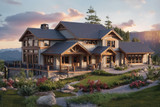
Every year brings new aesthetic preferences, material innovations, and updated building practices - but 2025 marks a much deeper shift. This year’s architectural trends reveal a fundamental change in how homeowners want their spaces to function, not merely how they appear. Influenced by lifestyle changes, demographic pressures, updated codes, and a greater demand for efficiency, floor plans and elevations are being reshaped at the structural level. The emphasis has moved away from surface-level style trends and toward architecture that promotes healthier living, long-term adaptability, and intentional use of space.
At Associated Designs, we design custom homes, produce pre-designed plans, and collaborate closely with builders and homeowners across the country. Through these relationships, we see firsthand which trends are gaining traction, what clients are requesting, and how real-world constraints shape design decisions. In 2025, the strongest design directions share one essential quality: they maximize the usefulness of every square foot while elevating comfort, light, and flexibility.
This report breaks down the architectural and floor-plan trends defining 2025, why they’re happening, how they appear in real homes, and whether they represent a lasting shift or a short-lived preference. Whether you’re planning a custom design or choosing from our home plan collection, these insights will help guide your priorities.
Indoor–Outdoor Continuity as a Structural Design
How This Appears in 2025 Architecture
Indoor–outdoor living has been a design staple for over a decade, but 2025 is the year it becomes embedded structurally. Instead of simply adding more doors to the backyard, new plans integrate outdoor spaces through:
- Multi-panel sliding or accordion walls connecting great rooms to porches
- Circulation paths aligned intentionally to outdoor zones
- Extended rooflines that form all-season porches and covered rooms
- Outdoor areas planned as true secondary living spaces
These aren’t decorative enhancements - they influence wall heights, roof engineering, mechanical planning, and structural spans.
Why Homeowners Want It
Natural light, fresh air, and adaptable entertaining spaces have become essential daily comforts. As people continue to work, host, and relax at home more, the outdoors serves as a vital extension of interior living.
Will it last?
Absolutely. Even compact homes under 1,600 sq. ft. now include large openings and functional outdoor rooms. This is a long-term priority rooted in wellness.
Floor Plans Organized Around Natural Light
How It Shows Up in Today’s Plans
Designers are increasingly using “daylight architecture,” where window placement drives structural decisions rather than the reverse. Common strategies include:
- Window walls along major elevations
- Corner windows in kitchens and dining areas
- Clerestory windows in vaulted rooms
- Interior courtyards or light wells
- Transom windows guiding daylight deeper into the home
Why It’s Popular
Natural light improves mood, makes smaller homes feel more spacious, and reduces reliance on artificial lighting. Homes that showcase abundant daylight also photograph and show exceptionally well.
Long-Term Outlook?
Daylighting is here to stay. It improves energy performance, elevates livability, and enhances long-term resale value.
Simplified Footprints, Smarter Space Allocation
Architectural Direction
2025 homes prioritize efficiency, not austerity. Designers are removing wasteful square footage and rethinking circulation to maximize usable space.
Key approaches include:
- Clean rectangular or L-shaped footprints
- Reduced oversized foyers
- Minimal hallway space
- Primary suites located for noise control
- Early mechanical coordination for efficient systems
- Built-in storage integrated into structural opportunities
The goal is not minimalism; it’s function per square foot.
Why It Matters
Construction costs remain high. Smarter footprints help homeowners invest where it counts and help builders streamline construction.
Is It Permanent?
Yes - this shift represents a smarter, more intentional approach to home design.
The Rise of One-Story and Main-Level Living
What We Were Designing in 2025
Single-level living continues to dominate demand due to aging-in-place planning, accessibility awareness, and simpler circulation. Even two-story designs frequently include:
- Main-level primary suites
- Secondary suites on the ground floor
- Laundry rooms connected to the primary closet
- Garage entries with minimal stairs
Lofts and bonus rooms now often replace full second stories, creating flexibility without sacrificing accessibility.
Why Homeowners Want it
One-level living supports mobility, simplifies HVAC efficiency, and improves outdoor connections.
Will it Continue?
Yes. Demographic trends are driving this for the long term.
Multi-Functional Flex Rooms Become Standard
How Flexibility Shapes Architecture
Instead of spaces locked into a single purpose (formal dining, dedicated office), modern homes prioritize adaptable rooms.
These often include:
- Pocket offices
- Dual-access bedrooms
- Flexible loft spaces
- Semi-open dens
- Convertible guest suites
These spaces require thoughtful placement of windows, doors, and structural supports to remain adaptable over time.
Why It’s Growing
Lifestyle needs shift quickly. Families want rooms that can evolve: home office today, nursery tomorrow, hobby space next year.
Is It Permanent?
Yes. Flexibility has become a baseline expectation in new construction.
Kitchens as Architectural Anchors
2025 Kitchen Trends
Rather than occupying the perimeter of the floor plan, kitchens serve as the home’s central organizing element.
Architectural moves include:
- Larger kitchen footprints integrated with living spaces
- Dedicated prep kitchens or walk-in service pantries
- Direct access to grilling porches
- Expansive islands aligned with circulation
- Built-in appliance walls requiring structural planning
Why It Matters
Families live around the kitchen. Making it the center of spatial flow improves connection and daily function.
Is It Long Term?
Yes. The kitchen-as-hub model isn’t going anywhere, but prep kitchens may shift as costs fluctuate.
Evolving Garage Design and “Functional Parking”
Architectural Shifts
Garages are becoming more thoughtful and less visually dominant.
Popular solutions include:
- Side-entry layouts for cleaner curb appeal
- Split garages for storage flexibility
- Deeper bays for hobbies or equipment
- Future-ready EV infrastructure
- Breezeways connecting detached garages
Placement of the garage now affects curb appeal expectations and circulation flow more than ever.
Why It’s Popular
- The desire for cleaner façades
- Modern vehicle storage (including EV infrastructure)
- Increased homeowner interest in hobby/workshop zones
Will it Last?
Yes, especially EV-supportive designs. Split and side-entry concepts will endure, but oversized hobby bays may vary by market.
Cleaner, Purpose-Driven Rooflines
How It Shows Up in 2025 Architecture
One of the strongest structural shifts of 2025 is the movement toward simplified, performance-driven roof geometry. While earlier decades -especially the early 2000s -favored complex rooflines with multiple peaks, dormers, and intersecting valleys, today’s homes are trending toward cleaner, more intentional forms. This stylistic change is not simply aesthetic; it is deeply tied to function, energy performance, cost control, and long-term durability.
Architecturally, we are seeing:
- Straightforward gable and hip roofs replacing overly complex multi-peaked structures
- Shed roofs incorporated into modern and transitional elevations for clean lines and solar efficiency
- Roof planes aligned for solar-ready installation, typically oriented south or southwest
- Low-profile dormers designed not as decorative add-ons but to increase usable volume and daylight
- Extended eaves and continuous overhangs to improve passive shading, protect openings, and manage rain runoff
- Reduced valley intersections, which simplifies flashing and lowers risk of leaks
- Structural spans optimized early in the design phase to reduce unnecessary load transfers and framing waste
This trend reduces construction complexity while supporting energy performance and long-term durability.
Why It’s Popular
Simplified roof geometry reduces construction complexity, improves long-term durability, and makes solar integration easier. Homeowners also gravitate toward the cleaner silhouettes these roofs create - a look that feels modern yet timeless.
Is It Long Term?
Yes. The blend of cost savings, energy performance, and aesthetic clarity ensures this shift will continue.
Secondary Suites, Casitas, and Multi-Generational Layouts
What This Looks Like in Current Designs
As multi-generational living becomes more common, home plans increasingly include dedicated suites that support independence and privacy. Associated Designs is seeing more requests for attached casitas with separate entrances, upper-level suites over the garage with semi-private stair access, and main-level guest or in-law rooms positioned away from high-traffic living areas. Many of these spaces include their own bathrooms, lounge nooks, or small service areas.
These are not aesthetic tweaks, they require electrical, plumbing, insulation, and circulation decisions early in the design process.
Why It’s Popular
Households are evolving - adult children returning home, aging parents requiring support, or long-term guests needing comfortable accommodations. Homeowners want layouts that adapt to these realities without requiring future additions.
Is It Long Term?
Yes. Demographic pressures indicate sustained demand for flexible, multi-gen-capable plans.
Centralized Utility & Mechanical Planning (The “Smart Core”)
How It Appears in 2025 Architecture
Designers are centralizing mechanical and utility hubs to improve system efficiency. Instead of scattering HVAC units, water heaters, electrical panels, and home-automation hubs throughout the home, these components are often grouped in a planned central zone. Some homes incorporate attic or mechanical lofts for easy service access, pre-framed chases for future energy storage, and dedicated EV-charging infrastructure in the garage
Why It’s Popular
Energy codes are tightening, homeowners want better efficiency, and system upgrades are becoming more common. A centralized mechanical core reduces energy loss, simplifies maintenance, and anticipates future technology.
Is It Long Term?
Yes. This is a performance-driven shift that aligns with building science, not trend cycles.
Transitional Architecture With Regionally Adaptable Exteriors
How It Shows Up in Home Plans
Homeowners want timeless exteriors, but not cookie-cutter ones. Transitional architecture blends traditional and modern lines, keeping homes broadly appealing.
This trend commonly appears through:
- Clean gable roofs paired with softened roof transitions
- Balanced, intentional window grids
- Simplified trim packages that reduce maintenance
- Material combinations such as stone, board-and-batten siding, horizontal lap, and selective metal accents
- Covered porches sized for daily, not decorative, use (often 8'–10' deep)
- Multiple elevation options—modern farmhouse, cottage, craftsman, modern—built on identical footprints
Plans often list multiple exterior options for the same footprint, modern farmhouse, cottage, craftsman, or modern, allowing design adaptation without altering the plan structure.
Why It’s Popular
Buyers want character without risking a style that will feel dated in a few years. Transitional architecture keeps homes visually grounded while allowing regional and personal expression.
Is It Long Term?
Yes. Exterior adaptability helps maintain resale strength, extending the lifecycle of a design.
Compact Luxury Layouts in Smaller Footprints
How This Trend Appears in 2025 Plans
Homeowners are increasingly choosing smaller homes—often between 1,400 and 2,000 sq. ft.—but expecting premium features. Rather than shrinking amenities, designers are reorganizing layouts to deliver a “right-sized luxury” experience
These compact plans often include:
- Vaulted or volume-enhanced great rooms
- Mudrooms with built-ins and storage alcoves
- Walk-in pantries integrated into efficient kitchen footprints
- Primary suites with upgraded bath layouts and separated vanities
- Covered outdoor rooms or patios incorporated into the main structure
- Larger window groupings to amplify natural light
- Simplified structural spans that make small homes feel open and airy
The goal is not size, it’s experience.
Why It’s Popular
With high construction costs, homeowners want exceptional living—not just more square footage. Smaller luxury layouts let them invest in quality instead of size.
Is It Long Term?
Yes. Economic pressures and lifestyle choices are driving a steady shift toward “small but exceptional”.
The Service Spine: Garage → Mudroom → Pantry → Kitchen
The “Service Spine” Trend
2025 plans increasingly refine the home’s “service spine,” the circulatory path that supports daily logistics. This route is thoughtfully sequenced so that homeowners move naturally from arrival to organization to meal prep without crossing through main living zones.
Common sequences include:
Garage → Mudroom → Pantry → Kitchen
or
Garage → Drop Zone → Laundry → Primary Closet → Primary Suite
These keep family logistics smooth and reduce clutter in public rooms.
Why It’s Popular
The service spine improves everyday flow—managing groceries, school bags, sports gear, pet items, and laundry with less friction.
Is It Long Term?
Yes. Builders and homeowners consistently describe this as one of the most functional improvements in modern layouts.
More Thoughtful Privacy Zoning in Open-Concept Homes
How It Appears in Current Designs
Open-concept layouts remain dominant, but 2025 buyers want more nuanced privacy without sacrificing sightlines or spaciousness. Designers are achieving this by incorporating gentle zoning strategies that create separation while keeping the home visually connected.
Architectural features include:
- Short hallways or vestibules that buffer bedroom entrances
- Angled or offset placement of rooms to disrupt direct sightlines
- Partial walls or structural posts defining kitchen, dining, or living spaces
- Prep-pantries or concealed kitchen niches that hide mess
- Slight floor-level changes in multi-level homes to signal zoning
Open concept remains, but it’s becoming advanced and more nuanced.
Why It’s Popular
Families still appreciate the openness of shared living spaces—but hybrid work, diverse schedules, and multi-generational setups demand privacy within the overall flow.
Is It Long Term?
Yes. This represents a natural evolution of open-concept design rather than a retreat from it.
Outdoor Service Architecture: RV Bays, Workshops, and Storage Wings
Architectural Expression in 2025
Instead of expanding garages excessively, designers are incorporating purpose-built auxiliary spaces that attach harmoniously to the home. These purposeful zones serve lifestyle-specific needs without overwhelming curb appeal. Common examples include:
- Dedicated RV or boat bays
- Hobby workshops with exterior door access
- Garden or tool storage alcoves integrated into the garage structure
- Small mechanical or equipment rooms located strategically off the driveway
- Exterior storage wings that visually recede behind the main façade
These spaces are structurally connected but frequently visually downplayed.
Why It’s Popular
Homeowners want working space for projects, outdoor equipment, recreational vehicles, and tools - yet prefer it consolidated within the architectural mass rather than scattered across outbuildings.
Is It Long Term?
Moderately to strongly, depending on region. Areas with recreation-driven lifestyles show especially sustained demand.
The Big Story of 2025’s Architectural Patterns
Across every category, one theme stands out:
Homes in 2025 are expected to work harder - functionally, structurally, and experientially -than ever before.
Rather than relying on cosmetic trends, homeowners prioritize:
- Better natural light
- Better circulation
- Better storage
- Better energy performance
- Better zoning and privacy
- Better indoor–outdoor integration
- Better long-term adaptability
These aren’t short-term preferences - they are architectural fundamentals that reflect how people truly live today.
For Associated Designs, these priorities shape both our custom design services and our ready-to-build home plan collection. Whether developing a fully custom layout tailored to a specific site or selecting from one of our professionally crafted plans, our goal is consistent:
Create homes that elevate daily life through thoughtful, future-ready design.


